Drones over Germany A Growing Threat Above German Infrastructure
Drones over Germany A Growing Threat Above German Infrastructure
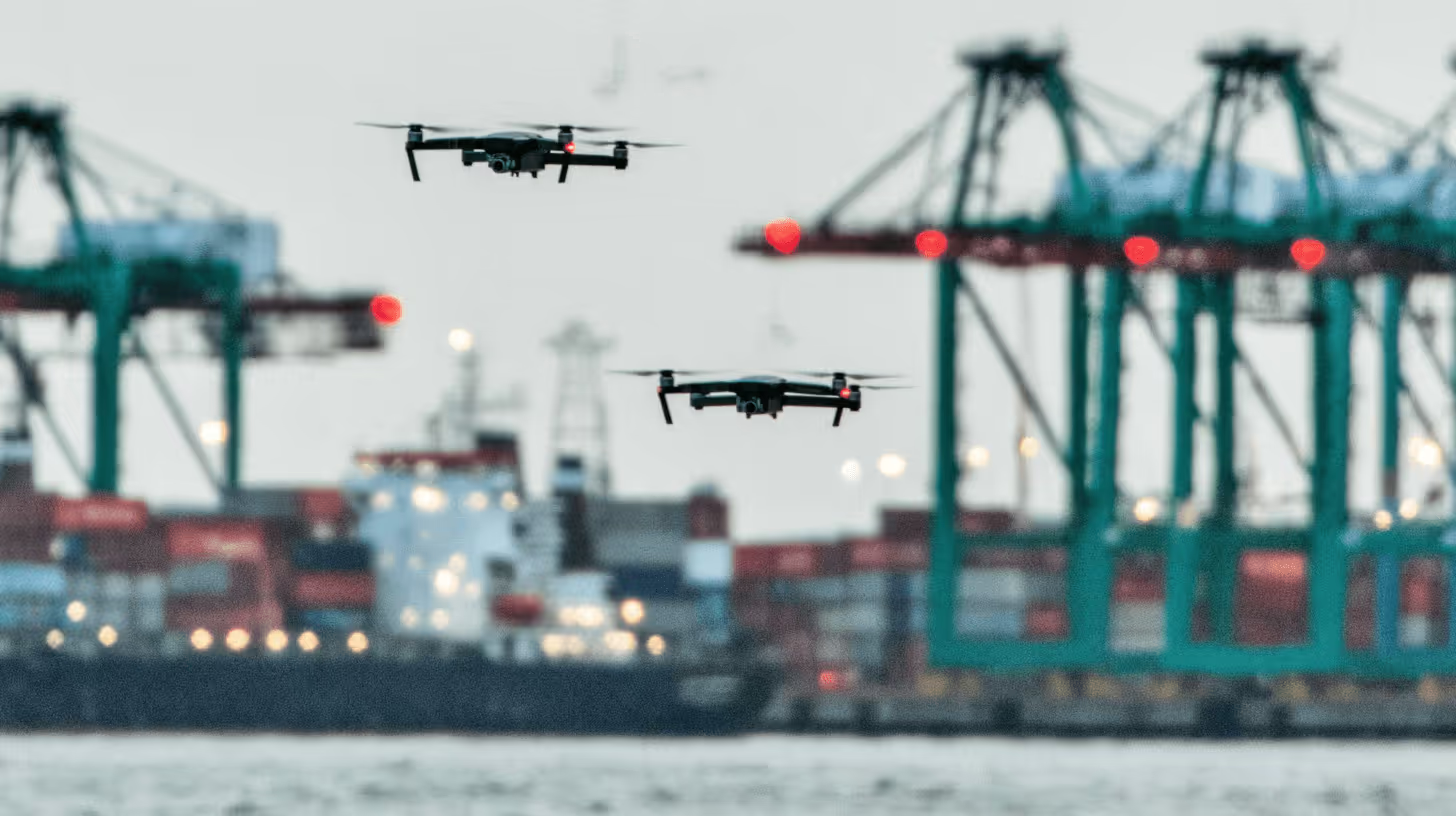
Northern Germany is currently experiencing an unusual challenge. For several weeks, German authorities have been registering drone operations above vital infrastructure: shipyards, power plants, storage terminals, and refineries. The drones operate in coordinated formations, sometimes even with so-called larger 'mother drones'. In other words: these are not hobbyists with standard consumer drones, but professionals with advanced equipment.
German intelligence services suspect Russia is involved. Specifically, they suspect Moscow is using civilian cargo ships in the Baltic Sea and North Sea as platforms for drone launches. This makes the threat legally difficult to contain. Anyone launching a drone in international waters operates in a legal gray zone.

Scale and Pattern: Systematic Operation
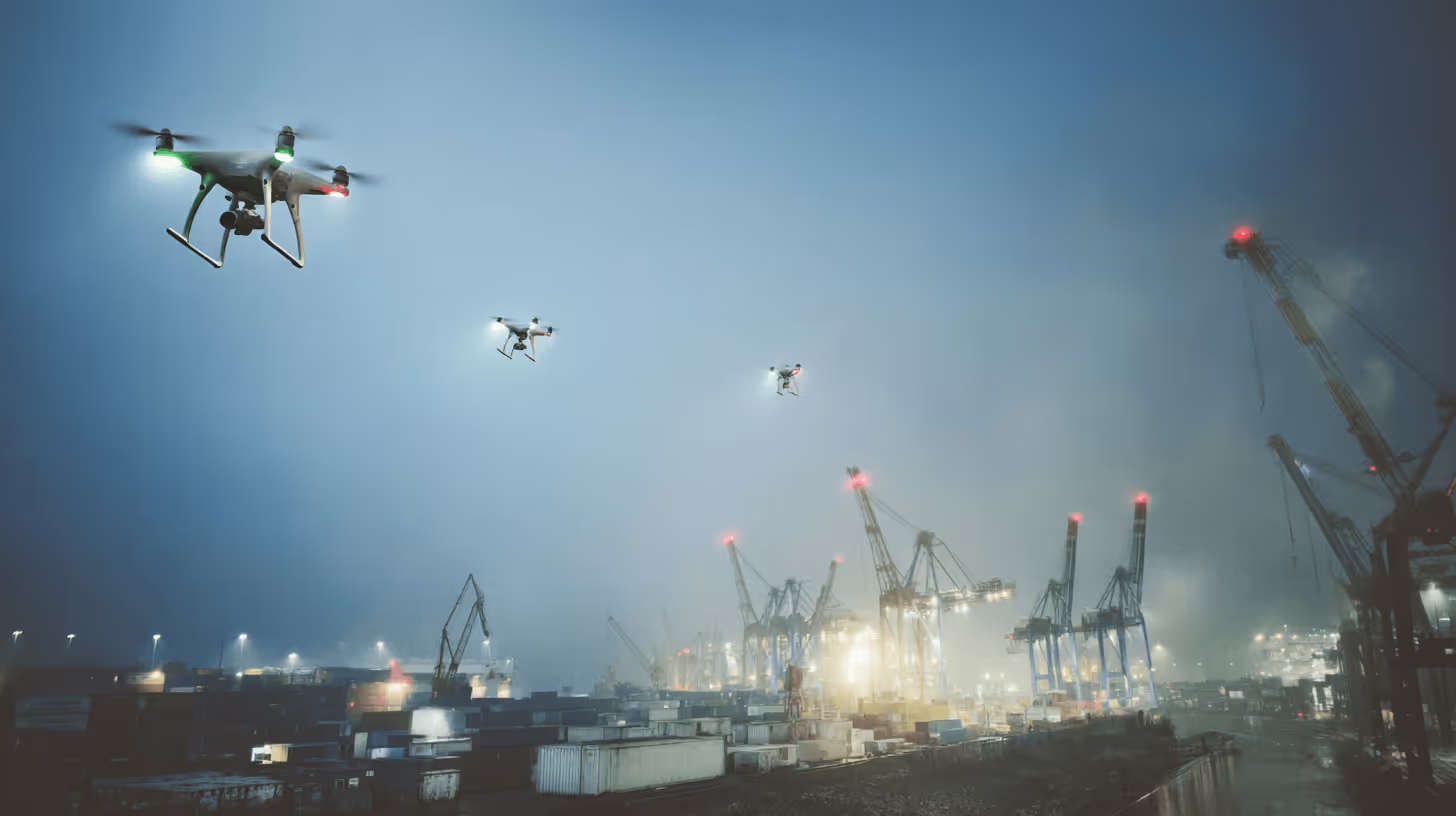
Since January 2025, Germany has registered more than 530 drone sightings in the first three months of the year, predominantly above military installations and vital civilian infrastructure. In September 2025, drone formations carried out coordinated operations above Schleswig-Holstein: first above the ThyssenKrupp shipyard in Kiel, then above a university hospital and power plant. Later that night, a larger formation flew over the Kiel fjord.
Experts speak of 'surveillance mapping', mapping critical infrastructure or strategic facilities. German media reported that drones were observed in August 2024 multiple times above nuclear energy installations near Brunsbüttel on the North Sea coast. Simultaneously, Denmark reports drones above critical infrastructure junction points, and Norway has registered similar incidents. This points to a systematic campaign against Western vital infrastructure. The implication is strategically deliberate. Whoever maps vulnerabilities is preparing for sabotage or espionage.
The Dutch Blind Spot
The Netherlands has critical infrastructure equally attractive for reconnaissance as German targets. Rotterdam processes hundreds of millions of tons of cargo through terminals that can be mapped from above. Storage terminals and processing centers are also interesting targets. Yet Dutch airspace monitoring against drones remains underdeveloped and fragmented between police, air force, and local authorities.
German observations translate directly into Dutch risk. When Russian drones systematically map German port installations, they do so not because of a unique German target, but because of the strategic value of Northern European logistics hubs as a whole. What is being tested in Germany is relevant for the Netherlands.
Poland, Denmark, and the Baltic States have prepared legislation allowing their military to shoot down suspicious drones. Germany is following suit, but the Netherlands is not yet, leaving organizations here legally and operationally equally vulnerable.

Three Steps Toward Preparation
This leads to a practical insight: organizations that have not conducted scenario exercises for asymmetric threats give the opposing party the 'advantage of first contact'. That moment occurs when drones actually appear. Too late to start asking questions then.
Step 1: External threat analysis. An external expert determines which physical locations, systems, and processes are vulnerable to drone surveillance and sabotage. For port operators: which terminals are visible from above? Which electricity and communication lines are critical? For gas storage companies: which compressor stations are vulnerable? For hospitals: which energy sources are single-points-of-failure?
Step 2: Red Team scenarios. Specialists in hybrid warfare work through how an opponent would actually conduct reconnaissance of your locations: open-source satellite imagery, identification of critical network points, legal enforcement gaps, personnel response under stress. In other words: not brainstorming, but practical simulation.
Step 3: Internal training. Once weak points are identified, train your crisis organization: who is incident commander, who communicates with government, who conducts damage assessment, what are communication protocols? This is where preparation differs from improvisation. A trained organization responds; an unprepared one panics.

Resilience and Strategic Leadership
Dutch organizations that now begin with external threat analysis, red team exercises, and training have the advantage of preparation before the threat reaches Dutch borders. Organizations that ignore this will only discover their vulnerabilities when drones actually appear in the sky or unknown vessels arrive offshore. That learning experience costs not only money, but operational continuity, public trust, and strategic autonomy.
This work requires specialists who truly understand hybrid threats: not just drones, but geopolitical context, legal enforcement, and crisis management. Few organizations have this well-arranged internally. An external threat analysis and red team session with specialists, working through realistic scenarios in which your organization is treated as a target, provides certainty before that moment arrives.
Organizations that now invest in preparation demonstrate not only resilience, but strategic leadership. That means anticipating the asymmetric threats of tomorrow.

Sources
¹ Euronews, "Russian spy drones over Germany turn into an even greater threat’’, 10 september 2025.
² The Debrief, "Germany Moves to Shoot Down 'Mystery Drones,' Points to Russia as Culprit’’, 15 januari 2025.
³ DronExL, "Germany Joins NATO's Drone Crisis’’, 2 oktober 2025.
⁴ Der Spiegel, ‘’Verdächtige Drohnen spähten offenbar kritische Infrastruktur aus’’, 1 oktober 2025.
⁵ The Debrief, ‘’Drone-waarnemingen over kernenergie-installaties, LNG-terminals en chemische fabrieken nabij Brunsbüttel’’, 15 januari 2025.
⁶ Zoals gemeld door Der Spiegel (september 2025) en CBC News (8 oktober 2025).
⁷ Duitse regeringsmededeling oktober 2025: ‘’Polen, Denemarken en Baltische staten keurden in 2025 urgentiewetgeving goed ter zake drone-neutralisatie. Duitsland volgt met Bundeswehr-bevoegdheid.’’
Stay ahead
subscribe to ourinsights
Subscribe to our monthly insights and receive the latest security insights straight to your inbox